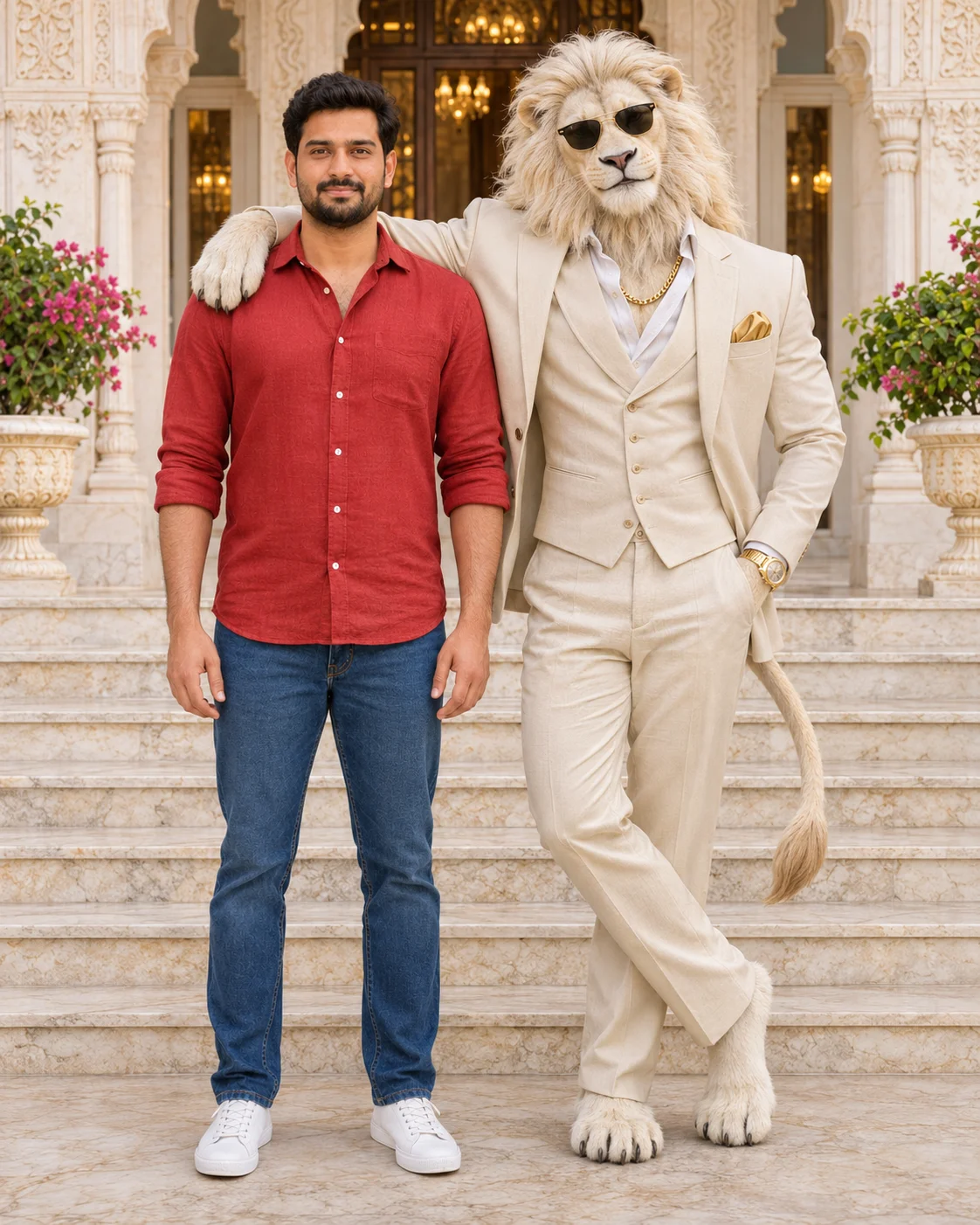
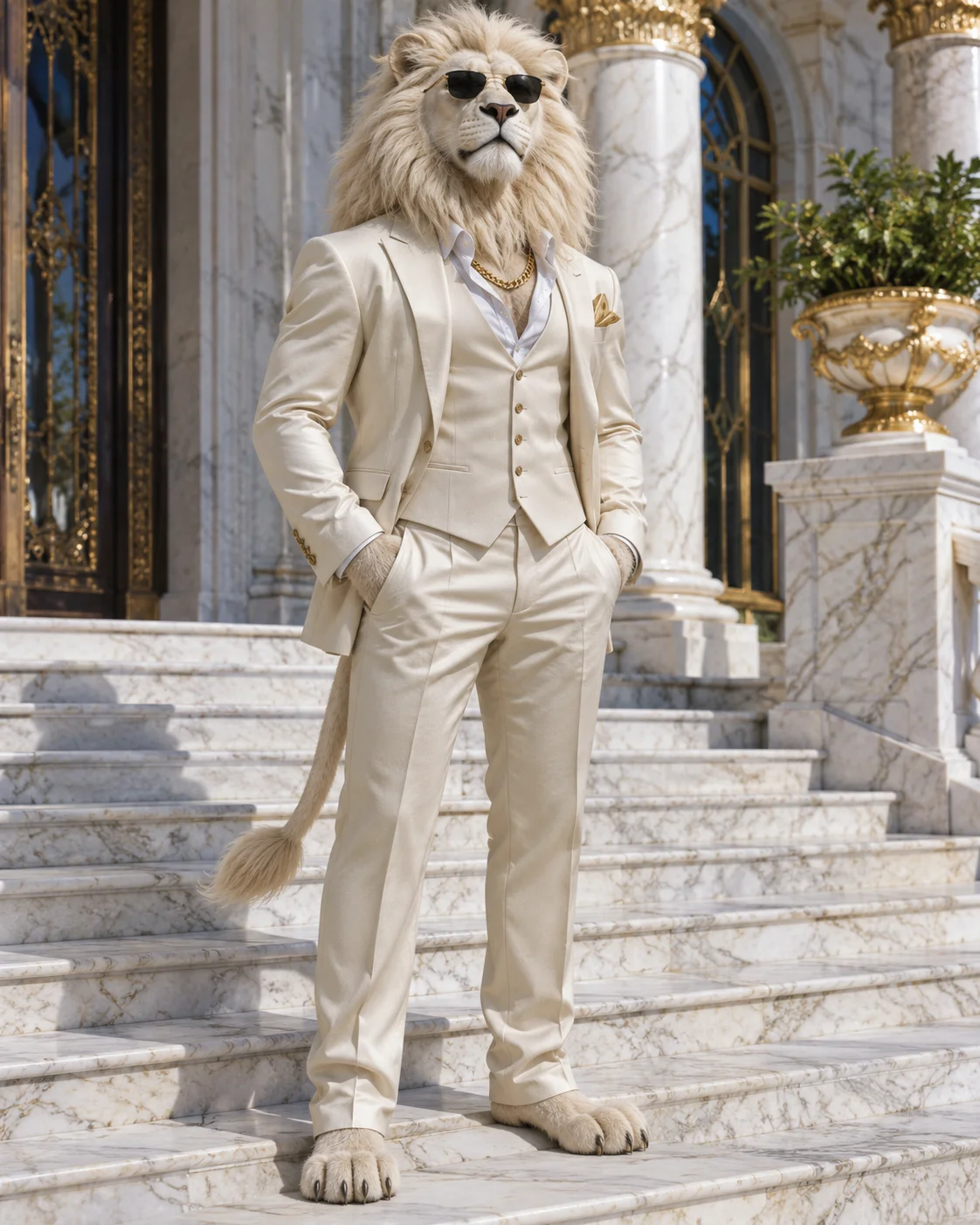
Creators usually choose between a solo character portrait or a companion shot where a real person stands beside the character. Understanding both options helps you select the right method.
Direct face swapping attempts to paste human features onto an animal head, or an animal head onto a human photo. For an anthropomorphic lion design, this often creates distorted muzzles and unnatural expressions.
Companion framing works much better when you want to include yourself. Instead of blending faces, you place your likeness side by side with the white lion boss. Your reference photo guides your appearance and outfit, while the tool creates the lion character as a separate companion.
Benefits of companion framing include:
• Distinct Anatomy: Your face remains human, avoiding animal blends while your reference photo guides overall likeness.
• Believable Story: Two figures standing together outside a building or near a car create an intentional scene.
• Shared Lighting: Describing matching ambient light ensures both subjects look natural in the same environment.